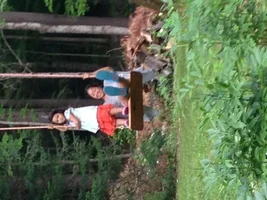
What's the best rope for a tree swing?

If you can find some 3 strand in black, maybe from a stage and studio supplier, it will be less prone to growing algae and acquiring stains. But white 3 strand tree master is what I have always used.

Reed Wortley
CTSP #01739
ISA CA #SO-6953A
 
I did a swing with 3/4 pro master. Pictures on Knot and Rope Supply website. Swing is 38feet from limb to ground and has rings and snaps spliced in at 8 feet off the ground to be able to remove swing seat. With the long length of rope, the swing movement is slow, makes it nice.
 
I did a swing with 3/4 pro master. Pictures on Knot and Rope Supply website. Swing is 38feet from limb to ground and has rings and snaps spliced in at 8 feet off the ground to be able to remove swing seat. With the long length of rope, the swing movement is slow, makes it nice.
That swing sounds like fun!
 
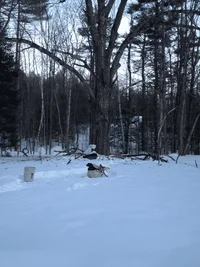
Here's the 250 year old red oak where the swing will be. I'm going to stabilize the the branch with some dynamic cable near the end to minimize the shock load, and tie it farther up somewhere (better safe than sorry). Looks like 3 strand gets the vote.
 

Attachments

  • tree swing.webp
    tree swing.webp
    68.1 KB · Views: 56
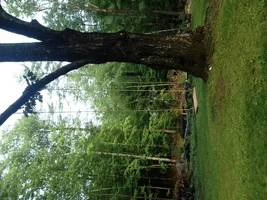
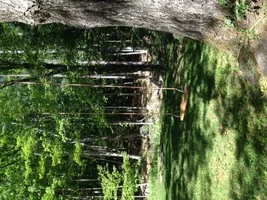
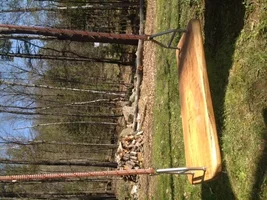
Finally took some pics of swing.
 

Attachments

  • swing 2.webp
    swing 2.webp
    92.4 KB · Views: 65
  • IMG_1556.webp
    IMG_1556.webp
    128.1 KB · Views: 57
  • IMG_1500.webp
    IMG_1500.webp
    96 KB · Views: 58
  • IMG_1670.webp
    IMG_1670.webp
    50.9 KB · Views: 63
what rope did you end up choosing?

This guy here seems to like tenex tec. Thats what I was thinking of using for mine. Made from polyester, easy to splice, seems like it would dry easily. What do you think?
 
If you use a hollow braid, it might be nice to run something cheap like hardware store solid braid up the first five or eight feet and stitch it there to keep it round and fat for gripping.

Sent from my XT1080 using Tapatalk
 
While reading this post about tree swings I thought I could share a tip on how I prefer to anchor the rope(s) to the branch. When a rope goes over once and is tied it will try to rotate back and forth as the pendulum swings slowly sawing on the bark.

But if you go all the way around twice and then back down there will be zero rotation as it swings. As the swing reaches the far side of its arc the leg on the far side goes slack and then as it comes back the near side rope goes slack.

Agreed you will need a longer sleeve regardless of material that will deter animal bites; weathering and abrasion. This is a little hard to visualize but next time you pull your rope out wrap it twice around your arm and pretend to move it back and forth like a swing and you see how there is no rotation compared to just once around.

The debate on it acting like a tourniquet is moot since only 1% of the time the rope is loaded with a rider.

In choosing what to use as the sleeve, I use my black flexible metal conduit since it is made with UV light resistant plastic which will outlive the rope it protects. But since there is no rope motion thru the sleeve you can use the non-metallic conduit that will not need the end ferrules and is sold at all home centers. I like the sleeve ends to begin and end at about 4 and 8 o’clock positions.

Happy swinging.
 
I put in a lot of swings. They are just like cables Require annual inspection and I make sure to take my kids to the inspections. Swings are my favorite service.

1. makes customers happy.
2.Keeps them in touch with their trees.
3. Keep arborist in touch with their trees
4. Keeps kids in touch with their trees.
5. Great reason to retire that climbing line annually
6. Makes tree happy.
7. Strengthens tree people bond.
8. Tree gets CO2 You get O2!! It's a mutual place of comfort.
9. Both parties benefit from less stress.

No other service I offer can give me all that!!!!
 

New threads New posts

Back
Top Bottom