













Treeaddict
Participating member
- Location
- Bel Air
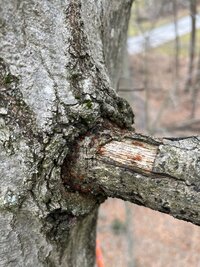
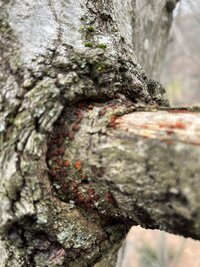
I saw this fungus in a mature red oak I was inspecting. I believe it’s coral spot nectria canker.
Located in Maryland.
It’s only in several locations and they are all dead branches. These branches are in areas which don’t receive as much light so I’m not sure if the fungus killed the branch or the fungus is attacking/eating the branch that the tree purposely killed for lack of production.
What say ye?
Would proper treatment be to remove all infected deadwood? Not a bad thing to do anyway.
Located in Maryland.
It’s only in several locations and they are all dead branches. These branches are in areas which don’t receive as much light so I’m not sure if the fungus killed the branch or the fungus is attacking/eating the branch that the tree purposely killed for lack of production.
What say ye?
Would proper treatment be to remove all infected deadwood? Not a bad thing to do anyway.
Attachments
Last edited:





















