
systemic injections.

here is a picture of what gall does to a Black oak in our area. even though most Arborist say it doesn't hurt the tree I dissagree, because this picture shows a definate deffect and eventually die back to the limb structure.

I'm thinking about trying Merrit because I've have come up with no other answers and some people sat that Merrit has unknown profound results.

Two questions: Does anybody know if it might help and when would be the best time to inject ? I notice the blistering usually occures in late spring.

Thanks

Greg
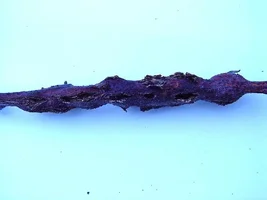
 

Attachments

  • 6469-Gall.webp
    6469-Gall.webp
    30.5 KB · Views: 128
Judging from photo, galls appear to be fungal in nature. If so, Merit, an insecticide, will be ineffective. However, Arbotect, a fungicide used in treating sycamore (anthracnose) and elms (dutch elm) might be worth a shot. Does the gall affect large wood? Here in Portland, we have lots of fungal pathogens which affect small/fine wood but rarely get into large wood. Makes for a messy tree but if you've got good detail pruning skills... Also, is gall spread by pruning tools? Might need to implement bleach? Not a lot of black oak up here.
 
Greg,

A type of gall we get here (which looks similar to yours) is caused by wasps, not fungus. I've always been told that the only course of action was to prune out overly afflicted limbs and then deal with the look. I'd love to have another option to offer if successful.
 
Mark ,

That is correct. A type of cynipid wasp.

Here is what I've gathered so far.

The gall itself does not create large limb die back , but two things happen directly and indirectly from the gall.

#1. If the twig or twigs are stung enough along a branch , there can be die back to a larger latteral. No new foliage appears or very little in the spring on the twigs and most of the time they die back to the gall. No foliage , well no photosynthisis and eventually a large latteral dies back. The larger lats. could be dieing back for other reasons, but I'm atributing it to the gall.

#2 In the later part of summer such as now, the larvae is already being developed and some new gall is being formed. I noticed leaves falling and some twigs dropping out of
this tree.Looking up to see what was going on , I found Steller Jays pecking at the new larva riddling the smaller twigs and then bracking the twig off behind the gall when done with it . I looked at the twigs and the Jays got all the larva out of every cavity that was in the gall. Well , thats a good thing , but on the other hand they're tearing the tree apart....lol... One of natures way of helping out ..another form of IPM ..?

Merrit generally workes on sucking insects, such as Aphids.At one point from what I understand, during its cycle in the gall , it will be sucking ( feeding)just before hatching.Merrit will be applied in winter and since it is a systemic material, it should be in the tree before they start to feed .

I expect a couple of years before I see some real results.

Greg
 
I found galls in a Live Oak I planted in my front yard. This is the second year I've had them. Last year I pruned out all but about 3-4, and those grew into nasty canker-looking wounds. This week I pruned out all the new galls I could spot and took out the 3-4 from last year as well. I'd rather have gaps in the canopy now than a screwed up tree later.

If they come back the next couple years, I may have to cut the tree down and start over with a different species. I'm not willing to have a compromised tree growing over my front yard and house. Funny, another Live oak on the other side of the yard only had maybe 10-12 galls each year.
 
Good thread. I've been seeing a lot of infected branch tips similar to that on Oregon white oak, there is usually a round exit wound the size of a pin head. I'll be treating an oak this fall for pit scale, the tree also has similar symptoms to kliminfools picture. The consulting arborist on the job hasn't informed me of what chemical he wants used, but maybe we can kill two birds with one stone.

Merrit can be applied as a soil injection too. Which is better for tree health systemic injection or soil injection. Won't the systemic injection wound the tree? Is a soil injection going to mess up the soil health?
 
Rhodi,

The way they say to apply this material if you dont have a lot to do , is just mix it in a five gallon bucket and then poor it in the root zone. I wont be diong actual injection into the tree. Although, I injected American Elms for five years for the Elm Leaf beetle and the drilling holes never seem to hurt the trees.It's a very small bit. However, Merrit now takes the place of the toxic stuff we where using before(meditistox-r) and its broadcast.Dont know how to spell it .

I havn't seen any imformation on wether or not Merrit does anything to the soil. As of now , nothing . I suppose if you over applied and to many times in one year , you might have a problem, but thats a good question.

Thanks
Greg
 
must step in here to remind you guys to read the label on your jug of Merit. if you deviate from the label you will be in serious trouble with the EPA and they go after you, not your company. Merit for systemic applications is best injected into the root zone where it will be translocated uo into the plant system. addition on liquid soluble fertilizer (as a seperate application) can help with uptake. Translocation can be delayed up to 60 days or longer following application. a soil drench is aslo a way to apply it, but on tree i think it is safer to inject it. if you follow the labeling guidlines for mix rates, application ,and timing, Merit should not damge the soil.
 

New threads New posts

Back
Top Bottom