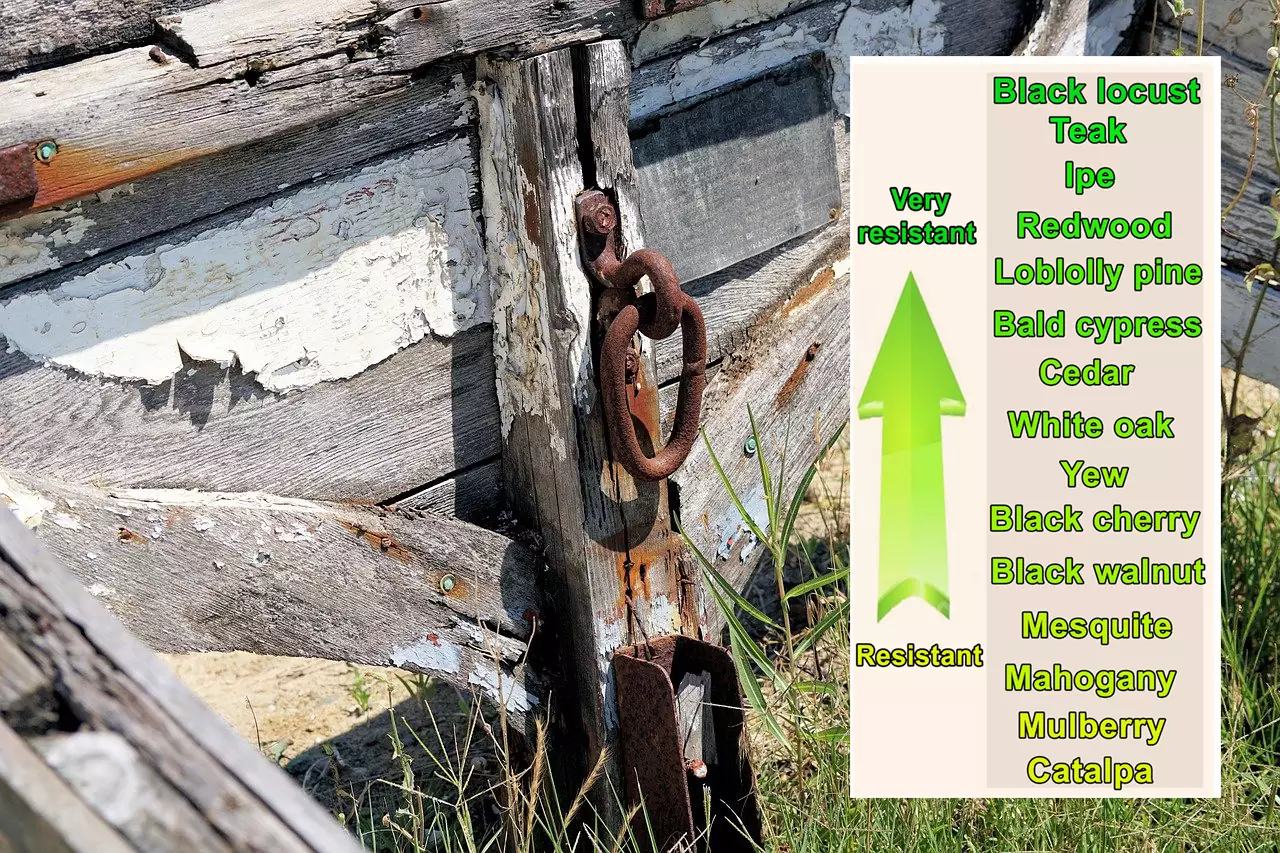
Rot resistant wood suggestions please

RogerM

Carpal tunnel level member
I am involved in a project and I'm looking to contribute some wood for a natural playground to support and anchor a tree section. It will be on its side and anchored to these horizontal logs. The architect involved wants either poplar or locust. Do you all have any other suggestions or experience with this type of project. My only attempt to help is to provide some raw material. Appreciate any feedback. I'm googlin' now..
 
I am involved in a project and I'm looking to contribute some wood for a natural playground to support and anchor a tree section. It will be on its side and anchored to these horizontal logs. The architect involved wants either poplar or locust. Do you all have any other suggestions or experience with this type of project. My only attempt to help is to provide some raw material. Appreciate any feedback. I'm googlin' now..
I have lots of Tulip Poplar in my property. I would not be surprised if it started to rot (on the ground) after 1 season.
 
I had poplar siding on my first house for termite resistance... but totally agree poplar droplar... the "architect" probably did a fast google search... it perked my ears up too. What about hickory?
 
I had poplar siding on my first house for termite resistance... but totally agree poplar droplar... the "architect" probably did a fast google search... it perked my ears up too. What about hickory?
My WAG of the some species mentioned:
1 Black locust
2 Oak
3 Hickory (due to density)

 
Last edited:
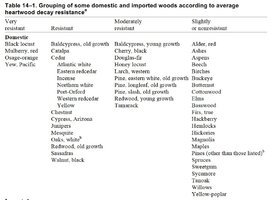
The Wood handbook has a rot resistance chart in the appendix. I am on mobile now to not going to download and search through that. If you can't find it, I'll look it up what I'm in front of my computer later.


That is an engineering book, so hopefully architect will pay more attention to that than what "some guy on the internet" found. I'm not saying the opinions offered or wrong, just that if you're going to talk him out of poplar, a published book may help with it.

As others have said:
if you do locust make it black locust
If you do Oak, make it White Oak but make sure the sapwood is removed.
Cedar depends on what kind of cedar...
Redwood is a great option If you can get it.
Catalpa is much lighter weight but it still has good rot resistance. It was somewhat widely planted to grow fence posts in decades past.
The heartwood of longleaf pine is also very rot resistant... I spent a summer as an intern in the woods in coastal North Carolina, where we found property corners that were marked with heartwood stakes that were 100 years old.
American chestnut....we can wish for that! Maybe one day... I just collected and planted some nuts off of it population of "Restoration chestnut" (15/16 American).

 
Forest tees from a hundred years ago aren't the same as what's growing, now.

Old growth western redcedar used to be used for gutters. Modern- grown plantation tree farms are way different.

Heartwood has rot-resistant, sapwood, generally doesn't, IME.

Western redcedar sapwood will easily rot way, way faster than heartwood.


Denser wood from slow-growing trees is better.
 
The wood handbook actually lists old growth bald cypress and bald cypress as two separate categories... Not that I want to see us decimating all growth forests, but like you said @southsoundtree there is certainly a difference.
 
Any way this structure can be built on some concrete piers? It might help with sourcing wood. Spruce if held above ground level lasts a good long while, and for me readily available.
 
The size of the wood needed will also make a difference. If you can use a really big piece of any of the hardwoods it will last a really long time. Also, does the designer intend for the bark to stay on or not? Some wood will retain bark for a good long time, others not so much, so that should factor in too as
 

New threads New posts

Kask Stihl NORTHEASTERN Arborists Wesspur TreeStuff.com Teufelberger Westminster X-Rigging Teufelberger
Back
Top Bottom