Recommend a rigging sling for small jobs on my own trees.

Mike Islander

Branched out member
I just started learning to climb safely. I have several large pines and live oaks on my property and would like to trim the dead limbs, plus do a little pruning when I learn more. I will likely need to tend my own limbs when I cut them. Some of the dead limbs, especially the pines, are up to 10" diameter and 20+ feet long. These are tall loblolly pines, up to about 3' diameter.

My plan is to cut fairly small lengths, lowering the ones that are over my fence, etc. I think if I keep the lengths small, it should be pretty safe, just more cuts and time.

Any recommendations on a sling? I really have no idea what would be the best investment with limited funds. I'm thinking a rigging ring sling or whoopie, but I really have no idea. I do have 150' of 1/2" Stable Braid on the way.

Many thanks,
Mike
 
As a safety note, you shouldn't do any cutting until you've been climbing long enough to have good work positioning and your comfortable up there. Then start with just a handsaw (which will still cut through a climb line) before moving up to a chainsaw.

As for rigging, if you would have to lower these yourself, your best bet (and cheapest) would be a couple of webbing slings and carabiners. Let the slings catch the limb, then piece the limb down in small pieces that you can throw to safety. This assumes that you have enough space for these limbs to hinge down.
 
As a safety note, you shouldn't do any cutting until you've been climbing long enough to have good work positioning and your comfortable up there. Then start with just a handsaw (which will still cut through a climb line) before moving up to a chainsaw.

As for rigging, if you would have to lower these yourself, your best bet (and cheapest) would be a couple of webbing slings and carabiners. Let the slings catch the limb, then piece the limb down in small pieces that you can throw to safety. This assumes that you have enough space for these limbs to hinge down.

Thank you for the advice. Definitely will start with one of my Silkys. I have a lot of hours on chainsaws, but virtually none in trees.

To clarify, do you mean I should let the sling hinge the limb, then cut into small pieces with the limb vertical? Only issue there is that the limb might break into pieces when it hits the tree.
 
Last edited:
Thank you for the advice. Definitely will start with one of my Silkys. I have a lot of hours on chainsaws, but virtually none in trees.

To clarify, do mean I should let the sling hinge the limb, then cut into small pieces with the limb vertical? Only issue there is that the limb might break into pieces when it hits the tree.
Yes, I like these in 36" https://www.treestuff.com/cmi-heavy-duty-loop-runner/ but there are many options. Add a rigging carabiner and you can use one or two slings to catch the limb then rappel to the bottom of the limb and work your way up.

If your concerned that the limbs are too brittle you can make the cut 5' out or so. They will loose some momentum before hitting the trunk. Keeping as much hinge wood as possible and a wide notch will also help them hinge over slower.
 
Or just learn a few different rigging knots and use the line itself without a sling(s). A half hitch and running bowline or daisy chain hitch. Lowering them down in large pieces means making less cuts aloft which is probably less dangerous as you're still new to climbing. My .02
 
Last edited:
To clarify, do mean I should let the sling hinge the limb, then cut into small pieces with the limb vertical? Only issue there is that the limb might break into pieces when it hits the tree.
A good low cost webbing sling would be a weaver webbing sling. Not my cup of tea because they are kind of bulky but would be good for your purposes. Get a handful, a couple 48”, a couple 36”, and some locking binders.

This scenario you’re putting out is not ideal in many ways, you are working alone, and you don’t have professional experience, and you’re dealing with sharp tools and heavy objects and gravity. Just keep safety at the forefront of every choice you’re making- consider the worst thing that might happen- and listen to the voice inside your head that is telling you something might not be a great idea.
 
Such great advice. I really appreciate it. On so many other forums a newbie like me might get told how stupid it is to even think about learning how to do something with inherent risk. And yet every answer here is real advice from folks with hard earned experience.

Thank you very much. I'll do my best to make wise decisions and not push too fast.
 
Ok not to be a buzz kill. But even slinging off 10” diameter dead limbs should be taken on by someone with more experience.
Self rigging is sketchy for many with experience, it can be done safely, but I’d venture to say it shouldn’t be take on by a rec climber without ample experience cutting aloft.
 
Slept on it and thought hard about it. Tall pines and big dead limbs are clearly beyond my skill set. One of these limbs fell through my boat shed last year and made beer cans out of the steel roof. For those I'm going to pay a professional. And for now I'll stick to piecing out the smaller oak limbs that I can drop on the ground or hinge and lower.
 
Last edited:
....maybe do some throwball fishing from the ground, if dropzone allows for it. Good decision btw.

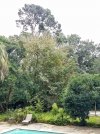
Definitely not a good dropzone below. If it were, I possibly would just cut them flush and let them fall. All three trees are on the fenceline. Two are near the house, but the worst is within about six feet of my boatshed. Not sure if you can see in the one photo with the loungechair.

Measured the heights (Cosine angle x distance from vertical). Trees are 65 and 70 feet tall. 30"+ diameters.

Below/Right Is My Shed. Some dead branches up top are more than 8" diameter. The photo makes half the top of the tree look dead. Not the case, just bad lighting. Most of the tree is very healthy. Just suffered some hurricane damage over the years.
Shed Pine.jpg

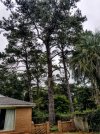
Fence you see is perpendicular to the property fence line, which is harder to see. On the near tree, the two dead lower branches are about 7" diameter. The lowest has a decent drop zone, but the second one is right over the fence.
House Pines.jpg

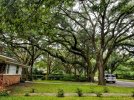
Fun and relatively isolated oaks all over the place. Not a fence or house crashing risk. :)
House Oak.jpg
 
Those Live Oaks are gorgeous
I showed some of the real winners in my intro post. We live in a somewhat unique neighborhood here in the Lowcountry.


New threads New posts

Kask Stihl NORTHEASTERN Arborists Wesspur TreeStuff.com Teufelberger Westminster X-Rigging Teufelberger
Back
Top Bottom