- Location
- Retired in Minneapolis
Take a look at what natural fibers can still do!
Rebuilding every two years means keeping the skills alive.
http://www.daylife.com/photo/01qKgur6Yh7Zm
From a hiker of the Royal Roads journal:
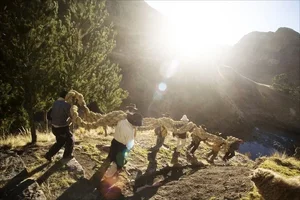
The Qeswachaka bridge straddles a gorge only slightly less breathtaking than the one once crossed by the Royal Road. The locals on either bank maintain it with huge enthusiasm. Every June they stream down into the canyon carrying armfuls of pajabrava, the tough, spiky tussock grass that thrives in the high Andes, which they press and weave into six thick cables – four for the footway and two for handrails. The cables are strung between the original Inca piers and secured round great eucalyptus logs buried deep underground. Finally the footway is laid with brushwood. Unbelievably, the resulting structure can carry a loaded llama; but the fibres deteriorate so quickly that by December the bridge is collapsing and the following June the whole process has to begin again. In Inca times a team from surrounding villages would have been permanently assigned to re-string and repair it, at the same time acting as guards, ready to apply a match in case of invasion. Today the work is more of a seasonal distraction, a way of paying tribute to Inca forebears and an excuse to get together and drink some chicha.
The cables wobbled alarmingly as I set foot on them. The fibres creaked and stretched and I suddenly felt rather small and vulnerable. The valley seemed deserted. But the pajabrava was fresh and the workmanship sound. With a sigh of relief I scrambled onto the far bank and set my sights on Cuzco.
http://www.wanderlust.co.uk/magazine/articles/destinations/royal-road-of-the-incas
Rebuilding every two years means keeping the skills alive.
http://www.daylife.com/photo/01qKgur6Yh7Zm
From a hiker of the Royal Roads journal:
The Qeswachaka bridge straddles a gorge only slightly less breathtaking than the one once crossed by the Royal Road. The locals on either bank maintain it with huge enthusiasm. Every June they stream down into the canyon carrying armfuls of pajabrava, the tough, spiky tussock grass that thrives in the high Andes, which they press and weave into six thick cables – four for the footway and two for handrails. The cables are strung between the original Inca piers and secured round great eucalyptus logs buried deep underground. Finally the footway is laid with brushwood. Unbelievably, the resulting structure can carry a loaded llama; but the fibres deteriorate so quickly that by December the bridge is collapsing and the following June the whole process has to begin again. In Inca times a team from surrounding villages would have been permanently assigned to re-string and repair it, at the same time acting as guards, ready to apply a match in case of invasion. Today the work is more of a seasonal distraction, a way of paying tribute to Inca forebears and an excuse to get together and drink some chicha.
The cables wobbled alarmingly as I set foot on them. The fibres creaked and stretched and I suddenly felt rather small and vulnerable. The valley seemed deserted. But the pajabrava was fresh and the workmanship sound. With a sigh of relief I scrambled onto the far bank and set my sights on Cuzco.
http://www.wanderlust.co.uk/magazine/articles/destinations/royal-road-of-the-incas