Climbing a sketchy red oak

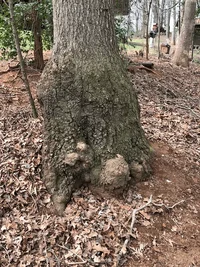
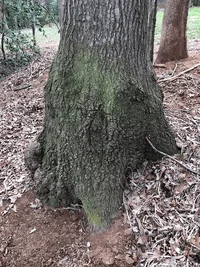
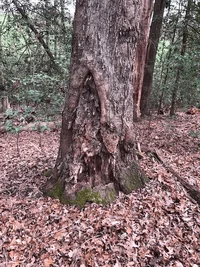
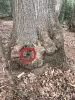
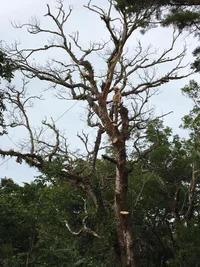
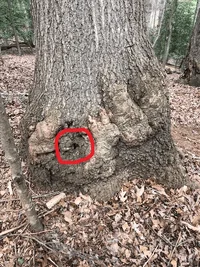
I'd like to get your thoughts on climbing this tree. It's approx. 120' tall red oak approx. 24" base dia. Owner wants it taken down because of lean towards the house also with the base condition shown. It appears to be sound and healthy to full height. The 4th pic is the base decay of white oak 20' away.
My gut feels pretty comfortable climbing the tree as it sounds solid at the base with a mallet.
There are a couple other good oaks 25-30' away I could climb & access the tree but aren't nearly high enough to get into the canopy.
My plan of attack is to access this tree to do the canopy then tie off to the adjacent oaks once I get down to their level.
Thanks in advance.
 

Attachments

  • tree 1.webp
    tree 1.webp
    149.4 KB · Views: 97
  • tree 2.webp
    tree 2.webp
    149.5 KB · Views: 95
  • tree 3.webp
    tree 3.webp
    146.4 KB · Views: 92
  • tree 4.webp
    tree 4.webp
    153.2 KB · Views: 97
  • tree 5.webp
    tree 5.webp
    132 KB · Views: 95
Looks good to me, I'd probably keep it if it was my property.

The one in pic 4 would go though if it's range of house.

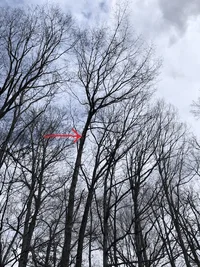
What's the red arrow pointing to in pic 5?
 
He's adamant on the removal as it would wipe out his house if it fell...and there's no shortage of them around the property. Plus it'll feed his water stove.
Red arrow is the tree in question. Was trying to show proximity to other trees and height / lean. Doesn't show very well though.
 
Do you have to rig the canopy out, or is it just cut and let fly? I'd have no issue if I could just drop everything. Rigging big stuff in a tree with a compromised base is no good. If you have to rig, maybe consider guying the trunk to the other tree you drew the red line from. Or, if it's that bad, get a lift in there.
 
I'd appreciate learning more about your rationale of tying off to adjacent oaks once you get down to their level.
How did you arrive at that 120' height measurement?
 
Probing around inside that hole could give you a good idea of the extent of the decay. You might be able to see some of it with a flashlight.
58453-af04f3c136c599c9bfc8c6c5ba90f1ad.webp
 
Would follow gut after more inspection.
>>Did it have leaves last season?
>>Would poke wound and bang with hammer and try to be skeptic and find hard fault
>>might even wipe bit, drill, see what shows in flutes
>>extra inspect on way up as already 1 check mark against it
.
Tree doesn't fully wind load to exercise and test tree before working
>>Would note that tree is buffered from wind loading somewhat on 3 sides
>>>>only open side wind catch would relieve lean somewhat, but then impact back
>>also head limbs touching limiting movement/dynamic loading
NOT same as a well tested and exercised tree with would that would fail during storm if can't take rig forces etc. type scenario
.
MIGHT consider, ez enough /equitable effort if have materials to tweak: for just running thru for practice if nothing else (more ya practice,the luckier ya seem to get)
>>bind base with cargo straps to firm(pic4)
>>throwline high crotching(or lower branch region) to brace back against lean
>>>>leave brace adjustable so as take weight off lean side , can take out slop that can cause impacts.
.
Would look to immediately remove climber weight in wood if could.
>>would look to especially not pull on tree with these first moves
>>would free drop or rig to neighbor if could
>>if clear behind tree sometimes can invert limbs (towards reader) to then speed line backside against lean with forces.
.
Would definitely fell from straight grain region.
 
If in doubt, guy it back. Then as Useless info said, cut your weight from the top.

As for the idea of tying to other trees for wood- at that point you’ve already cut out so much weight, if you’re bombing it, there’s no need to change tie-ins, except for speed of not resetting a primary with each cut. If you’re rigging out the trunk wood, definitely consider using an adjacent tree for a rigging point.
 
-the idea was tying off to adjacent tree just as an extra safety measure if something started getting ugly I could bail but I would want it to be higher than my TIP if possible.

- I estimated the 120' height using the old "eyeball a stick next to a 6' guy" method from boy scout days. May not be exact but its close.. its a tall SOB

-yes I'll probe, inspect more before I begin. He didn't want me to do any of that at the time

- I was waiting on HO to verify septic tank location. Just called me & its not close so I'm clear to just drop everything without rigging so that takes most of my concern away.

- I'll utilize a guy as well
 
On a dead oak I was felling I saw a squirrel leap from the top of the falling tree to the branch tip of of a somewhat distant willow oak, at the precise moment when the top of the dead tree was passing closest to the other. The squirrel climbed away while the felled tree crashed and shattered on rocks. I carry the image of that leaping squirrel whenever I climb super sketchy trees. If a tree should fail from under me I will either be that squirrel or, in my attempt to be it, my last thoughts will be focused and optimistic.

No worries since you can drop everything. Had a septic field been all around underneath, you might have sent then branches down, butt tied, on a near-vertical speed line. After you're down to just a trunk, tree failure strikes me as highly unlikely unless you're blocking down giant pieces and stopping them fast.
 
Last edited:
I don’t mind having a single line set in a near tree while working down a spar if I can. Especially with my spurs in red oak bark.
 
-the idea was tying off to adjacent tree just as an extra safety measure if something started getting ugly I could bail but I would want it to be higher than my TIP if possible.

- I estimated the 120' height using the old "eyeball a stick next to a 6' guy" method from boy scout days. May not be exact but its close.. its a tall SOB

-yes I'll probe, inspect more before I begin. He didn't want me to do any of that at the time

- I was waiting on HO to verify septic tank location. Just called me & its not close so I'm clear to just drop everything without rigging so that takes most of my concern away.

- I'll utilize a guy as well


The taller the object, the worse this method gets.

A clinometer app works great. You can learn to pace the length from tree to observer, and adjust uphill and downhill.


Using a 20' long branch, visually 'stacked' from far away, 6x's...

More accurate than 6',stacked 20 X's.
 
I was thinking that 24" was a tiny trunk for even a 100 foot red oak.
The few I see that are actually clear of 100 have all been well beyond being cut through with a three foot bar, even forest trees.
 
I do know where a pine between 8" and 10" dbh is probably 95' or so. It bounces between other trees in the breeze and has a little brushy top that I could carry with little trouble.
 

New threads New posts

Back
Top Bottom